Category Archives: Film

What is Art? What is Happiness?

What is Art?

Certain artists -artistes if you will- invite you into their world, to see your own world through their eyes. For many viewers/ listeners/ readers/ participants this can often come across as incomprehensible nonsense. For others more-attuned to the wavelength of the originator perhaps, it can immediately be recognised as a breakthrough, speaking directly to the heart of what they’ve always felt but could never hope to express -or if not that, immediately appreciated as an expression of truth -or even a new kind of truth.

The rest of us can wander around as if in a daze afterwards, unable to comprehend what we have witnessed, often experiencing an incomprehensible anger or contempt towards what has been put before us, such is the level of mistake or seemingly wrongness to it all.

People often attribute a certain intellegence-level to the appreciation -or lack of appreciation- of such art (and it works both ways, with cries of elitism or braindead-ism for its enjoyment or otherwise.) Perhaps it is a branch of intelligence, but to my thinking it has nothing to do with the Comprehension we usually mean by intelligence. In fact I believe it is often the opposite of this: it’s to do with the ability willingness to traverse comprehension.


None of this is to suggest I’m always to the fore in recognising/ enjoying/ appreciating such an ‘auteur’. There are many such ‘creators’ in different fields whom I readily admit must have something but which I can never (thus far) grasp. eg. Thomas Pynchon, Jean Renoir, Tom Waits, James Joyce, most ‘modern art’ artists, etc..

Immediately I’m a philistine to fans and officianados of these people, I know. I don’t mean to cast aspersions on such maestros’ work, but rather shine a light on their commitment to the craft -their vision -their outlook on life. I salute such singular approach to “Art” in all forms, whether I “get it” or not.

This to me is what Art is. A true artist is one who knows (no doubt) the rules and has heard all the arguments for how things are supposed to be done. He/ She is aware of every reason why something doesn’t work, but yet spots or senses something new, something unconsidered, something overlooked and brings it to the fore.

Sadly, more and more it seems, the world is full of so-called writers/ directors/ painters/ musicians who first look outwards at “what the audience/ publisher/ agent wants” rather than inwards at “What do I know? What do I feel? How do I see the world? What can I bring to the table?”


To my way of thinking, this is the difference between an Artiste (whether I can personally appreciate them or not) and a whore. Mostly the world of cinema/ books/ ‘art’ consists of whores.


What is HAPPINESS?

Happiness is a 1998 film by Todd Solondz.
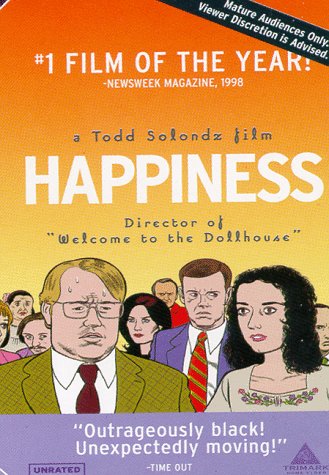
 

The first time I saw it (around the time of its release on Region 1 DVD) I must confess I was appalled. The film, with its depiction of some seriously dysfunctional individuals in a seemingly-comic setting jarred me so much I felt contempt for everyone involved. “How could these people even agree to act in such a movie?” was my genuine first thought. I couldn’t believe, for one thing, someone had made a film wherein (among other things) a paedophile was portrayed sympathetically. A sickened anger arose in me long before the credits spurted onto the screen. I even felt anger towards my wife who afterwards conveyed no such contempt for what we had witnessed. How could she have so much as tolerated this travesty?

For a long time after (hours? days? weeks?) I was Alex from A Clockwork Orange following his aversion-therapy. Whenever I thought of that film I felt ill. Seriously.


Then a strange thing happened some six months later: I happened across a forum where people were expressing an appreciation of “that film”. As I read, I began to be reminded of scenes that “weren’t too bad”. Once or twice I tittered despite myself.

Yet it was some three months after this again when I finally found the courage -or the will- to rewatch Happiness. My reaction was a complete reversal -I laughed and loved it all the way through.


Since then I have watched Happiness at least seven times and each time it gets better and better. I now count it as one of my favourite movies of all time. I do find it too long but there is nothing in it I would or could think of that should be cut.

Although I sympathise with the view that it is a sick movie, I look back on the person I was when I first experienced it (in 1999 or so?) and feel nothing but an almost embarrassment for my reaction.


The movie was the same, so what changed?

The obvious answer is “me”, but it’s not just that. Of course on my second viewing I was forearmed with the knowledge of what was -and was not- going to happen. I was no longer viewing it, imagining where it was going, but now I could actually look at where it was going and perhaps experience that for the first time rather than watching in fear of what would come next (no pun intended).

Certainly though, the main thing to have changed in that 9-month or so period from first viewing to second was me. This movie I believe showed me how a movie should be (in my view).


The problem with the movie is also its strength: it has no Hero Protagonist -nobody for us to root for -nobody we can easily empathise with -nobody we want to empathise with.

It’s not the first or the last film to do such a thing of course (not even from this director) but for some reason it took me many months after viewing Happiness to realise that almost every film out there virtually insists I ‘like’ the protagonist(s) and plays to my prejudices and preferences in order to gain my affection.

Happiness almost does the opposite. It’s a film whose characters are surely disliked by everybody, yet dares the viewer to look past this to see the bigger picture.

Post-Happiness, I think perhaps I’ve learnt to be more guarded with my affections towards onscreen characters. I don’t submit to them freely -and I find myself separating emotion from the rest of the ‘package’ that makes up a film.


It’s likely this film wasn’t solely responsible for my ‘movie-viewing transformation’. For instance I’ve always found myself favourably disposed towards the films of Stanley Kubrick, who is often (wrongly) said to ‘lack emotion’. What Kubrick -and the movie Happiness among others- does is to lay the plans out at one’s feet and allow the audience -the viewer- to decide how to react/ how to see it.

Armed with the fruits of this ‘effort’ the viewer is better able to judge for themselves what they have seen/ how they feel towards it. The result is everybody sees it differently -as true-art is always experienced. No two people see the same Kubrick film -and nobody sees the same Kubrick film twice in the same way.

Don’t get me wrong -spending 90 minutes being spoonfed emotion-on-rails via manipulative characters/ visuals/ audio can be enjoyable too. Who’d like to live on nothing but steak after all? That can be as debilitating as the guy who spends a lifetime slurping beans with a spoon.

It’s not an either/or choice, but I would dearly love if the phrase “leave the brain at the door and enjoy” was more readily recognised for the braindead remark it truly is.

By all means enjoy the chicken nuggets and the sausages and the beans and the sugary candy, but don’t mistake it for a slap-up all-round honest-to-goodness healthy meal.


Anyway, after fourteen years or so I thought it important to throw a few thoughts together on the subject and to mention that I believe Happiness is a truly excellent film that deserves widescale recognition and acclaim.


Barry Lyndon Duel Scene Found

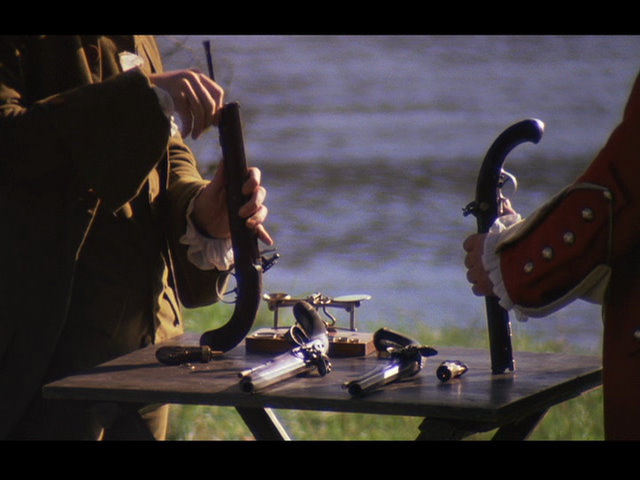
I spoke a little while back about what makes Barry Lyndon such a great film and about the (first) duel scene in particular.

Well at long last I have visited this very location in Templemichael Co. Waterford (well actually just outside Youghal Co. Cork) and returned with some interesting photographs of this still-tranquil location.

Of course without a wide angle lens it was never going to be possible to ‘recreate the scene’. And some inevitable changes have taken place/ additions made/ removals/ overgrowths, etc. in the past 25 or so years, but overall it’s still recognisably the same place.

Take a look.

Continue reading Barry Lyndon Duel Scene Found

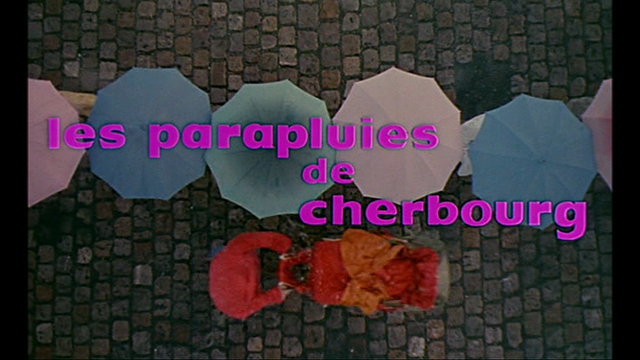
The Umbrellas of Cherbourg -My Kind of Anti-War Movie

There is something self-defeatist about movies that purport to be anti-war spending 90 minutes bathing in blood and comradeship. Violence is its own advertisement. Showing more of it in order to lessen it is akin to invading a country in the name of peace.

Furthermore, like a closet-gay spending an inordinate amount of time ranting against homosexuality, the very people who get their knickers in a twist over onscreen orgiastic blood-letting are often the ones most titillated by it. How else can Gibson’s Passion of the Christ be explained? Extreme violence turned up to a sadistic-11 in the name of all that is holy and righteous.

The truth is Violence and Aggression and Anger and Death are cool. Singing and Romance are not. I say that with a contemptuous sneer, not as a justification for what is considered cool.

Singing & Romance (together) are allowable nowadays only if accompanied by a nod & a wink that advertise how you recognise the inherent uncoolness of it all, but that you are so cool you just don’t care, which makes it acceptable and perversely cool.

But before ironic cool uncoolness there was unapologetic joy and love and beauty and raw emotion without the baggage of the pre-packed Happy Meal mode in which to consume it.

You can fight and complain about what is considered cool -and make a good case as to why it should not be so considered, but the more you do the cooler it gets and the further into Crater of Uncool you dig.

Enter The Umbrellas of Cherbourg.

Continue reading The Umbrellas of Cherbourg -My Kind of Anti-War Movie

What makes Barry Lyndon a Great Film?

It’s a slow movie, granted, but Barry Lyndon is lovely to look at, to sink into and to soak up. It’s a 3-hour 18th century bath, made with complete care. Music, visuals, scene-development, plot and camera movement blend together like a ballet (no I’m not into ballet either). I know that might sound like a stuffy sketch of almost any movie, but here it’s different.
.
For example, take the duel scene from early in the movie (no spoilers)

*** You need to TURN IT UP to properly hear the music -the music *must* be clearly heard here. ***

…you could say it’s a duel, one guy gets shot and the other has to run away to Dublin. The end.

But -taken from the start… close-up of the guns is like a painting… 

Continue reading What makes Barry Lyndon a Great Film?

3D or Not 3D?

.

Confession: I saw Jaws 3D five times in the cinema. I was a young teenager and, like, IT WAS 3D!!

.

There were other 3D movies at the time, such as Spacehunter: Adventures in the Forbidden Zone with Peter Strauss that I saw multiple times because HEY! IT’S 1D BETTER THAN 2D!!!

.

Then I grew up.

.

If I was a young teen today I’d probably bet wetting myself (and hiding the evidence down the back of the bed) with the selection of 3D movies out and coming soon. Some of them, such as Toy Story 3, aren’t even dependent solely on the 3D effects.

.

It’s a glorious time to be 13 and a consumer of movies!

.

The problem for me is I’m no longer 13. I don’t care if the flat screen in front of me is displaying layered images as a story is unfolding. The whole effect reminds me of nothing “real”, but most closely resembles parralax scrolling, hailed as awesome as far back as the videogame Moon Patrol in 1982, and now in use most notably in Flash animations across an internet near you (unless you’re an adherant to the religion of Apple).

.

It was exhilerating to watch how smoothly a game like Turrican ran on the Commodore Amiga while it presented a background moving on several planes, depending on how far away they were supposed to be. Like WOW!

.

Now I don’t care. Now I’m interested only in what’s in the box. Not the box itself.

.

But that’s just tough on me because teens are the movie-going demographic du jour. Since I am outside that demographic, the movie studios are not targetting me nor do they care what I think of it.

.

For the record though, I thought it important to state my opinion: 3D is a load of crap. …at least 3D in its current (and previous) form, with required glasses , is a load of crap.

It adds nothing but a dark plastic layer between the viewer and the movie. It’s like visiting someone in prison and having to talk with them through a wall of glass. If that wall wasn’t there, even if we were still not allowed to touch or move nearer, wouldn’t we be that much closer?

.

It seems every electronics manufacturer in the world has staked its family silver on the mass-adoption of 3D technology. Whether we like it or not, it is coming because “they” have decided.

.

Allow me to make a prediction: There is a guaranteed new market crash in our future and 3D technology will play a big part in it. Nobody in anything like big numbers is going to pay cold hard cash to replace their “2D” television so they can have the privilege of watching Coronation Street or Desperate Housewives in 3D. And even if they did, they would soon get fed up with finding and cleaning and replacing their 3D glasses.

It’s just silly to believe it could be any other way.

.

Yet, every large multinational conglomerate, from SONY to Samsung, from Nintendo to Mitsubishi (hmm, are all of these Japanese/ Asian?)… OK, from Microsoft to every Hollywood movie studio (some also owned by some of the above), appears to be putting every ounce of their weight behind this technology.

.

So what happens when that techology collapses (as it will, inevitably, because as I said: It’s crap)?

.

Unknown Knowns

.

“There are known knowns; there are things we know we know. We also know there are known unknowns; that is to say we know there are some things we do not know. But there are also unknown unknowns — the ones we don’t know we don’t know. So when we do the best we can and we pull all this information together, and we then say well that’s basically what we see as the situation, that is really only the known knowns and the known unknowns. And each year, we discover a few more of those unknown unknowns.” -Donald Rumsfeld, 2002.

.

I believe Rummy missed one: The unknown knowns.
.
In fact, I believe most popular movies/ books/ anything else misses this too. It is a highly underrated knowledge.
.
The unknown knowns are those things you know, but aren’t aware you know. They could be things you take for granted or something right under your nose that you never knew you knew about -for example you might “know” something to be true, but never actually think about it (and so not know you know) until perhaps someone else mentions it.

.
“She’s pregnant!” …only after you hear it do you realise that you somehow “knew” all along.
.

Similarly, the best comedy is often to be had from these unknown knowns -everyday life events we already know about, but weren’t aware we knew or did. When they are held up in front of our eyes, perhaps through a skewed lens, we have to laugh because we recognise what we already knew, but somehow didn’t know we knew.

.

Why do I say this is missed by most books and movies nowadays?

.

Well, in my opinion the best “works of art” are almost indescribable, yet speak sometimes in a personal nature directly to the reader/ viewer. It’s not something that can be described in the blurb in the back of the book, so it’s not easily marketable, so it’s unappreciated.
Or under-appreciated at least.

.

Maybe the book/ movie hasn’t even broached a topic, but yet puts a certain thought in your head or leaves you with a mood that is familiar and yet new. These are the greatest.

.

I’ve often turned the last page of a book I really enjoyed and half an hour later could barely remember any of it. To me, that makes the book almost a complete waste of time.

.

On the other hand, the best books can often be harder to get into -they need some work by us readers, to place ourselves in the right frame of mind to appreciate “the full show”. But as the last page is turned, we are left floating for a long time afterward. Maybe with much to think about or just to appreciate the mood.

.
The unknown knowns can also lead one to that “ah yes of course!” moment, as when you suddenly realise “AAHHH So *THIS* is where it’s all going! -I didn’t know that, but now that I know I know it, I knew it all along!”


.

The unknown knowns are the best of all knowns and unknowns because they take the least effort with the greatest reward (or at least the groundwork has already been done, maybe subconsciously).

.
NOW… The next time you find a forgotten tenner in your back-pocket you will hold it aloft and declare with joy: “The unknown known!”  🙂

.

.

Jim Emerson has a good discussion on Rumsfeld’s points here.

.

Why Beauty Matters

Roger Scruton had a documentary/ report/ essay on BBC a couple of months ago called Why Beauty Matters. It’s about how the idea of beauty in art is/has been lost/ abandoned.

I agree pretty much with the views expressed in that. People on the whole have become too cynical for beauty in Art. As with in all other artistic areas these days, I would suggest the portrayal of negative attributes is what is often most highly praised.

Most “modern art” (at least the most popular kind) is a jaded death spasm of an urge to rebel, which itself is now nothing more than conformity because few people have the courage to portray Beauty or Happiness or pleasant scenes or thoughts or actions when the Art world is expecting -and only allows- “mind-pricks” with a particular message or non-message or a cynical “dare to nay-say this!”

Beauty in modern art is often used only as a counterpoint to the pain and suffering of others or to come or that has been. It is rarely the focus, the raison d’etre. Beauty is too subjective, and so, too many people might not “get it”.

Death and Fear and disdain and cynicism are more universally shared commodities.

It’s hard to dismiss a portrayal of Death or a work of art that justifies itself simply as “a bit of a mess”. To criticise -or even discuss- this last one is lending it credence and adds to the mockery and disdain of my personal view and ‘wants’ from Art.

That’s not to say “it’s not Art” -but just that it’s nothing I care to talk about or debate.
Feel free to enjoy it yourself. Sleep in it for all I care.

A work that is made to “uplift” is nowadays dismissed precisely because of the bland, homogenised, compartmentalised, formulaic, “digital” view of the world. Everything is labelled and put in its box for easy consumption. Want “uplifting”? Go to Disney or see a Ron Howard movie.

But those places we are “supposed to” go to for that uplifting experience are themselves the greatest distributors of Cynicism and Formula and disdain. They languish in Politically Corrective strategy groups, paring edges off anything that might offend, almost always leaving nothing but the bare bones of a thread that will “appeal to” (which now means little more than ‘not offend’) as wide an audience as possible (which translates as ‘doesn’t have any nipples in it because granny might have a heart attack if she knows the 3-year-old suspects women have breasts!’)

Here’s the programme I mentioned above

Underrated Movies (part 4)

This series of (some of) my favourite under-valued movies begins here.


A Very Long Engagement

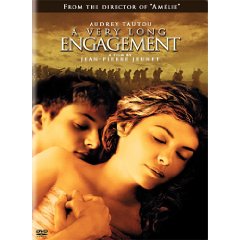
averylongI’ll let you in on a secret: I wasn’t crazy about that darling movie Amelie. In fact I didn’t like it. If Amelie herself had been played by an ugly 50-something everyone would call her a nosey busy-body. The fact she’s a beautiful young Audrey Tatou means she is impossible to disagree with. I find that disagreeable -whether I disagree with her or not.
And another thing, my favourite Jean-Pierre Jeunet movies to date are the ones he made with Marc Caro (Delicatessen and my real favourite City of Lost Children), but those gems are at least much praised by anyone who mentions them. A Very Long Engagement though, was all but forgotten soon after its release. At least I don’t notice any fuss over it. Outside of France, bien sur. This is a shame because it rivals the best of them.

Again Audrey Tatou blesses the screen with her natural charms and screen presence, but this one is much more of an ensemble piece with a cast of (it seems) hundreds. This can make it confusing at times to remember who’s who and what’s going on, but nonetheless it only makes you want to see it all over again from the start right after watching. We’ve all seen films about soldiers living with the affects of war, but this is more about the people who stayed at home and how they manage to recover (or not). It’s never depressing or overly sentimental -at least not in a bad way. Beautifully shot, perfectly played by all the cast. Lovely story -the type that seldom escapes the Film Formula Factory these days. Watch it in wonder and awe. …And it’s unfair of me to say I prefer those earlier films since they are nothing whatsoever like this one so any comparison is moot. It would be like me saying I prefer paper over soap. I have no idea what that means either, but watch A Very Long Engagement. You won’t regret it.
(There’s a slightly longer view of this movie now available here if you’re interested. No spoilers!)


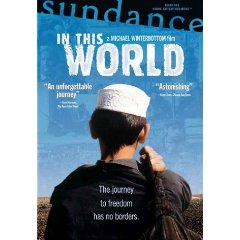
In this World

inthisworld

If you don’t know already, you’ll be put off as soon as I tell you what this film is about. Trust me, I know you will. Can I get away with telling you it’s a thriller? No? …OK, it’s about some boys whose family pay to have them leave their village in Afganistan (before the current war, as writing in 2009) and be smuggled into England. To say the journey doesn’t run smoothly is putting it mildly.

BUT WAIT! Come back… it’s not a preachy “oh woe is this shame” movie. It is a thriller as I said. You will be on the edge of your seat and you will know you’re not being lectured. Michael Winterbottom has made some great movies. This is one of his best.


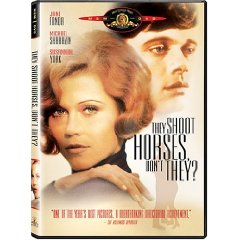
They Shoot Horses Don’t They?

theyshoot1

Yes yes, I know. That box art looks maudlin. Don’t let that put you off though. If you’re like me you’ve wondered many times what everybody ever saw in Jane Fonda. I’ve even seen her in her hey-day and wondered that. Could it just be they’re in love with her father Henry? I’ve often asked myself. Other Fondas are hit and miss.

But anyway, I saw TSHDT (as I like to call it) relatively recently (mid-2000s) for the first time and was blown away. It’s an amazing recessionary tale of survival and dance. It’s like X-Factor (which I hate too!), The Running Man, Rollerball and The Cannonball Run rolled into one. As ridiculous as it sounds, it concerns a depression-era dance marathon that just about never stops… last one standing takes the grand prize of $1,500!!
I am told such things existed in real life, but it’s hard to fathom how it was allowed.

These people are desperate. They put on a show of their life -and yours. Even Red Buttons (who never did much for me either it has to be said) works his socks off and delivers an amazing performance.

And Jane Fonda… oh boy. She is amazing in it too. And looks stunning.
Sydney Pollack directed a number of really good solid movies, including Three Days of the Condor, Tootsie, The Firm and others. I believe They Shoot Horses Don’t They? is possibly his best.


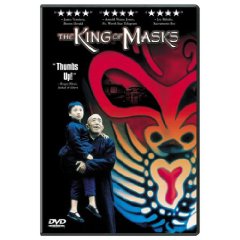
The King of Masks

kingofmasks

Not so much underrated as rarely seen, King of Masks features the greatest cinema performance by a child ever. The movie is heartbreaking and uplifting -but never in schmaltzy sentinemtal ways.

Tip: The less you know about the story before watching, the better. But I’ll tell you this much… it’s about an old man looking to pass on his knowledge and secrets to the grandson he never had.

It’s a movie that doesn’t show China in the best light, so for that reason can be hard to find. Well worth the effort.


The Proposition

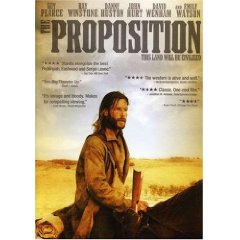
thepropositionBudget constraints keep this movie from being the all-time-classic it should rightfully be. With just a teensy bit more scope it would easily sit alongside films like Once Upon a Time in the West or Unforgiven.
Guy Pearce is told he can save his younger brother if he goes into the savage wilds and kills his “mad” older brother. A proposition indeed.

What I would (still) absolutely love to see added to the film is an initial half-hour-or-so showing the three immigrant brothers step off the boat in this ‘new world’, full of fear, hope and innocence. *That* alone would catapult this movie to the position in which it belongs.


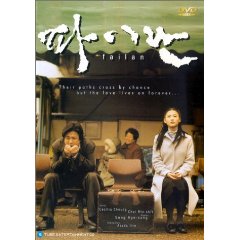
Failan

failanPlease -do yourself a favour before the inevitable Hollywood remake… do not look at any still pictures from Failan (even the one pictured here!) because they all make it look dire.
Man marries (for ‘mob reasons’) a girl he meets in a registry office. They split with barely a word spoken between them. Much later he falls in love with her -but is it too late to find her?

It’s hard to do this film justice in a synopsis that doesn’t spoil the plot. It’s a gritty film -not the romantic mush it looks like. It’s also top-class filmmaking.


This list of under-rated movies starts here.


Underrated Movies (part 3)

This series of (some of) my favourite under-valued movies begins here.


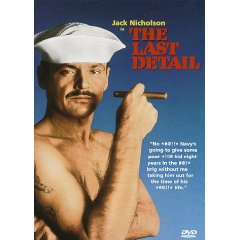
The Last Detail

thelastdetail1
I haven’t yet met a male of the species who has seen this movie and doesn’t think it’s anything short of a masterpiece.

After viewing, Mrs. Rumm said “yeah it’s alright, but there’s no women in it.” She’s wrong in that, but in essence she’s right. It’s all about the men.

Still, do all stories have to involve a woman? I’m sure there are some perfectly good tales involving mostly women. I might even think of one and mention it here shortly. This one happens to be about some men.

A young sailor is being taken to prison by two MPs, one of whom is played by Jack Nicholson. The banter between them (written by Robert “Chinatown, Shampoo & others” Towne) and their whole outlook on life & living, goals & ambitions is all male. That’s not to say it’s stereotypical bravura-male or over-the-top dumb bullheadedness, but somehow it gets to the heart of manness without ramming it through the other side. Nor does it need to go over the top. It is pretty x-rated language if you’re sensitive to that kind of thing though.

Hal Ashby made a number of classic near-perfect films. This is one of them.
Even Randy Quaid is excellent in it. No really!

*STOP THE LIGHTS*: I have now met one man who doesn’t like this film. He found it dated and unnecessarily coarse. Must say I disagree with both issues, but just thought I’d pop that in for balance.


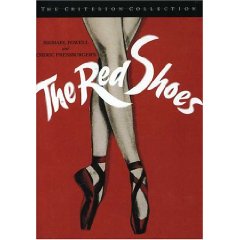
The Red Shoes

redshoes1
One for the men above. Perhaps one for the women here. Then again, what the hell do I know? I’m a man and I love this film. I think every woman should see The Last Detail and everyone should see The Red Shoes too.

Yes it involves ballet. Yes there is a 20 minute unbroken ballet in the middle of it. No I’ve never been to a ballet nor felt the urge.

But it’s not about ballet, in my view. It’s about art -and what it means to create art -and to live for art -and needing to be a part of it -and being in the thick of it -and being unable and unwilling to think of a life without it.

The Red Shoes oozes class, but it’s not stuffy. Much of its cinematography especially is very daring. Tricks are played with the camera and with certain scene setups that would make you sit up and take notice if it had been made in 2009. Not to show off, but to convey thoughts and emotions and ideas beyond what can (or should) be put into words. Its deep colour is like a warm duck-down duvet you want to wrap around you and dissolve into forever.

But again, it’s not all artsy and grand -yes, certain characters are cold and distant, but this is merely the result of the life they lead… or the life they lead is a result of their one-track-mind.
Art is Life/ Life is Art. If it is any other way for you, then that rule does not apply and you do not belong here.

It’s not exactly a love story, but a passion story. That passion has nothing to do with ballet in particular so much as Art in general. If you have a passion (or once had a passion) beyond the physical or material, you will fall in love with this movie and perhaps inspire you onward and upward.


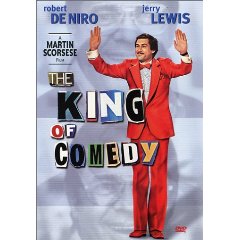
The King of Comedy

kingofcomedy
I always think of The King of Comedy right after thinking of The Red Shoes (and vice versa). The two are forever linked for me. Maybe it’s because I first saw them around the same time (early/ mid eighties?). I honestly don’t remember.

But I like to think Rupert Pupkin is desperately trying to get into the world occupied by those people in The Red Shoes. He feels he belongs there. Nothing else matters to him except his art -which in this case is “comedy”. He lives for it. Or at least he wants to live for it. And live from it. And he passionately believes he can and should and needs to.

He can’t get a toe in the door, however. He’s too old to start at the bottom. He needs that one shot at the top and he’s willing to do drastic things, such as kidnapping, to get it.

Is he delusional? Is he psychotic? Is he really awful? Is it possible he can pull it off? Should he be allowed get away with it if he could?

I love this film for all of the above reasons, but also because it doesn’t go for the easy or pat answers. It’ll keep you thinking to the end and beyond. Then you’ll want to watch it again and you’ll find new things.

…New things such as, for instance… Remember Maury in Goodfellas? He’s the guy who sold wigs. He played some part in a robbery, then kept nagging for his cut until he was offed in a car. Well that guy has a cameo in King of Comedy… There’s a restaurant scene where Rupert has a date. ‘Maury’ is sitting behind him, briefly mimicking De Niro.

Why?

Here, I found it on youtube. We see ‘Maury’ in the background at the start. He comes back from the toilet or wherever, then he does his mimicking towards the end of the scene, before he leaves.
Have  a look…

Did you see him?

For me, if there is a point in this, it’s that this guy is “on the outside” and is trying to force an image of himself onto those in this “world of the movie”. He wants to be IN like Rupert wants in.

I guess it could also be some kind of outtake where Scorcese later felt De Niro made a better performance and hoped nobody would notice the guy looking at the camera in the background.

I prefer my take on it though. He’s not just looking, he’s playing to the camera -and the earlier shots of him only appear to be setting him up to doing so.

Scorsese hasn’t been thinking this outside-the-box in years and years. He should get back outside that box pronto in my view. He has been going a bit stale this past 10 years or so if you ask me. (…Of course nobody ever asks me, but if they did they’d know a thing or two I tell ya!)


One Night At McCool’s

onenight1
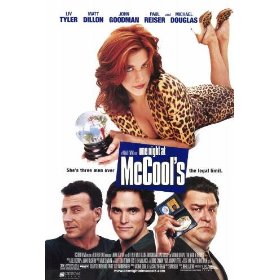
I’ve never understood how this movie wasn’t a massive hit. It has so many hilarious threads that all come together perfectly it’s almost not even funny how funny it is.

Again, it could come down to the male-female thing, since we’re talking about it above. I’ve seen men criticise it for saying all men are dumb and their brains are in their underpants (these are the ones who don’t find Liv Tyler attractive.. !).
I’ve seen women criticise it for perpetuating the notion that women are evil, manipulative, conniving little vixens.

I don’t believe either is a valid criticism of this movie. I also do believe at least a nugget of truth can exist in both -which is what makes One Night At McCool’s so funny.


One Hour Photo

onehour1
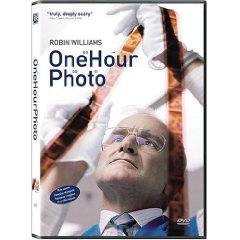
One Hour Photo is one of those movies that is hard to say much about without spoiling. I’ll only say, I don’t like serial-killer type movies (as I said in a previous post in this series), but this film does not fall into that hole in any way, shape or form.

It’s a movie about loneliness and idolatry and far away hills being green. It’s also a movie about faith and what happens when belief in a particular notion is cracked open. Anything can happen.

Robin Williams, alas, has become a kind of caricature. It’s hard to see him in a film without sighing at his no-longer-funny outbursts and twee pursing of his lips. But rejoice, for Robin Williams is nowhere to be seen in One Hour Photo! It’s like a different person. There is no likeable movie star on show. The man on show in this movie is like a blank canvas whose actions are beautifully portrayed by the guy who used to be in Mork and Mindy believe it or not!

We never know what’s in his head or where he has been.

Around the same time as this movie came out, Williams played a kind of similar role in another movie, Insomnia. I really liked his performance in that too, but I’ll have to watch it again before mentioning it here, so you could do worse than have a quality night in with Robin Williams ( ! ) by renting/ buying/ downloading these two films. If you haven’t seen One Hour Photo in particular you will find yourself re-evaluating everything you ever thought you ever knew about him.


More underrated movies here.


Underrated Movies (Part 2)

More movies that should be more popular. Why they should be and why they’re not.  According to me.

It began here.


Indiana Jones and The Temple of Doom

temple1
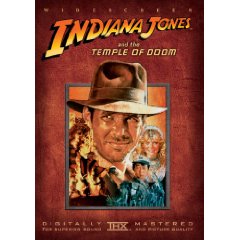
OK it’s not exactly a forgotten classic, but it is in my opinion the most overlooked, underestimated and rewatchable Indiana Jones movie.  From what I hear, both Spielberg and Lucas feel they got the atmosphere wrong. They made it too scary, then too childish. The tone is all over the place. It’s neither fish nor fowl, for children nor for adults.

The non-US release (on video/dvd at least -in Europe at least) had all the ‘horror’ parts cut out, so we don’t see any severed hand in a box or live-heart extractions to the same degree, etc.. With a result the movie comes across as a ridiculous cartoon with no tension. Children shouldn’t be frightened you see! This is Spielberg’s favoured cut of the film (when last I asked him) and I think he’s wrong. Dead wrong.

The US release however still has these scenes intact, which helps the more ridiculous moments to be seen as more like light-relief rather than movie-defining set pieces.

Spielberg and Lucas are remaking/ revisiting those 1950s Saturday matinee action B-class movie serials, so the Indy movies are meant to be hokey and silly and fun as we all know. But what the boys seem to have forgotten is these (original) movies were actually scary at times, once upon a time. They weren’t always only for children. Temple of Doom (uncut) to my mind has that mix of moods just right. It’s not a consistent tone, but I don’t want consistency. I want thrills and dumbness and action and room for the characters to breathe. This is the Indy for me.


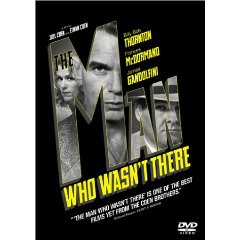
The Man Who Wasn’t There

manwhowasnt
Never write off the Coens. That’s an adage I hold in high regard. To be honest I found this movie very dull and pointless the first time I saw it.The casting of well known actors particularly distracted me. They didn’t seem to fit in this black and white 50s period piece for the most part.

Still, it was going cheap a while later and I bought the DVD. It sat on my shelf for over a year unwatched and unloved. It might as well have not been there.

Then, one day I felt ready. I put it on and fell in love almost immediately with the rich black & white, the hilarious performances and with Billy Bob Thornton’s look, silence and screen presence.

Now I believe the casting of the often larger-than-life secondary characters is inspirational. Almost certainly I had been distracted by these characters and the overall series of events first time around, with a result I barely took note of the central performance, which I suppose is the whole point.

Still, we can’t appreciate a character’s ways or subtleties (or lack of them) until we better know who they are and how they will react to events. Billy Bob’s character in The Man Who Wasn’t There takes a little longer to get to know than most.

As with all the best films in my view, The Man Who Wasn’t There warrants a second look.  And many more. He’s there alright. You just have to keep looking.


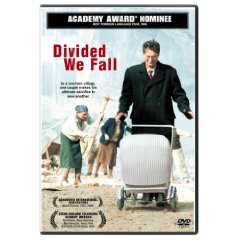
Divided We Fall

divided1
It’s easy to do nazis. Nobody can criticise a movie for being unfair to them. Nobody is going to rush up and say “actually it wasn’t quite like that…” because we all know they are the baddies and even if it wasn’t like that they deserve no better.

With the result, nazis have become a 2-dimensional dartboard. Any film that presents a multi-faceted dimension (such as for example, the excellent Downfall) is immediately criticised and attacked for making excuses for the actions. This is a dangerous airbrushing to my mind. How are we to recognise the faux-friendly, charismatic, populist, persuading face of such Powers if we’ve only ever seen the comic book Evil in all its height? What would we do if we suddenly opened our eyes to find ourselves in the middle of a world where fear invades every private thought and action?

Why did millions of people in many countries across Europe do nothing while the worst atrocities were being performed under their noses? Did they know? Did they want to know? Did they consciously mean to support the nazis in their ultimate aim? All of them?

Not many films broach the topic. It’s easier to show ‘Evil’ and atrocities and to point the finger and say “see how despicable this is!” and wait for the awards to flow in.

Divided We Fall looks like it might fall into this category, but it hasn’t been lauded and praised as highly as all the other “Holocaust movies” so it’s hard to muster the energy to watch it.

But this is an example of a great story being tarred with the brush of others. It’s actually not a holocaust movie at all. There are no concentration camps or easy tear-jerking scenes. It’s actually a very funny movie that understands the need for humour in the darkest of moments. Too many WWII tales miss this entirely -or lack the courage to show it.

Anyway the box/ poster above, I know, does nothing to sell the story. It doesn’t exactly make you want to see it, but I’m not sure what would… other than a persuasive recommendation. I hope this mini-mention persuades you to at least think about sourcing and viewing Divided We Fall. Don’t be put off. It’s funny. It’s frightening. It’s never exploitative or predictable. It’s a small film, but a lot more real and revealing and rewarding (and dare I say “enjoyable”?) than the big budget gut-wrenching, soul-sucking, hard-slog “retellings of the time” we all feel duty bound to sit through from time to time.

If you have have a chance to see it, see it. You won’t regret it.


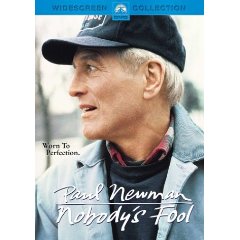
Nobody’s Fool

nobodys1
As with Divided We Fall above this film suffers from being hard to assess without actually seeing it. It could be a bit twee and melodramatic and most of us would rather not waste our time finding out. Life is too short and there are too many other films out there than to bother with something that looks like it might turn into a sopfest or something your mother would watch on a wet Sunday whilst waiting for Antiques Roadshow to come on.

This is the first film I watched (that I can think of) that made me want to read the book it is based on. Normally, if I haven’t already read the book, watching the movie is enough (for right or wrong). After Nobody’s Fool ended however, I felt like I hadn’t spent enough time with these characters. I wanted more.

Then I read the book by Richard Russo and I’m happy to report it too is great (even better of course!) and well worth reading. There are marvellous plots and subplots and characters in the book that had to be omitted if the film was to be made at all. That’s understandable -and the cuts are so well made for the film it’s not easy to see where more layers can or should fit if you haven’t read the book first.

After I finished reading the book I still felt I hadn’t spent enough time with these people, which started me checking out Richard Russo’s  other books. All to date have been great, but Nobody’s Fool still has a special appeal to me.

Paul Newman has rarely, if ever, been better in my opinion. And I include The Verdict in that.


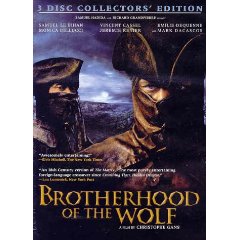
Brotherhood of the Wolf

brotherhood1
I don’t seem to like most blockbuster action movies. I think it’s because they’re mostly dishonest, over-manipulative, formulaic, over-serious, over-bloated, childish wastes of celluloid (or RAM), featuring a one-man-goody-two-shoes who is actually a “somehow moral” psycho, killing only other psychos -so it’s all alright. None of which can be said of Brotherhood of the Wolf.

Nobody is “the good guy”. Well not really. Which, to my mind makes the long list of psycho fighters a lot of unadulterated fun, bereft of the emotional baggage your average Hollywood blockbuster would have us believe we must have.

If you do see it, make sure you’re watching the director’s cut. It goes on forever and it’s a ride you won’t forget too soon.

What is it? …Well, for starters it’s French language (Canadian). Set in 18th century France, where everybody fights in a Kung Fu style. For no apparent reason that’s the fighting method of choice. They’re all at it. Including the women. And what women! It’s maad I tell you. Monica Bellucci melts the screen with her sizzling charms (no, she doesn’t fight to my recollection) and never looked better. That’s saying something. Her husband is in it too. That’s saying nothing.

Apart from not featuring a cleaner-than-thou pure-Good psycho for underage children to look up to, I believe the other reason this film was not a success is the rather-special special effects. It’s some time into the movie before we get to see “the beast” that has been terrorising the countryside. When we do our collective hearts drop because it’s so bad it belongs in something like Scooby Doo.

Although this does take us out of the movie, it’s not really about the beast himself, so for me it’s a forgiveable problem.The ultimate “explanation” is (or would be) a lot more realistic than this ridiculous computer model would have us believe though, so hang in there!

Obviously budget and CGI-ability at the time (2002) played a big part in its sub-parness. I reckon a revised director’s cut is called for, with a new digital beast using today’s technology. It should cost a lot less now too.

I doubt that will come at this stage, though. 🙁

Anyway, the movie rips along and you never know where it’s going to take you or how it will be resolved (if it is to be resolved!) Neither does it kowtow to PC-sensibilities. In fact, if there’s something you hold dear your sensibilities will almost certainly be stomped on one way or another by the end of this film.

Other than the cheap-looking CGI, the rest of the film doesn’t look or feel too low-budget. In every other way it’s a large canvas, bodice-ripping action adventure for adults who can appreciate a story that is not on rails.

It’s a movie like none other -17th century French Kung Fu, with nary an Asian person in sight to at least pretend it makes any sense. Yet it is based on actual events. With added kung fu, naturally.

Watch at your peril. It’s a great movie if you’ve found yourself tiring of the standard formula, but you have been warned.

…Now I really feel like watching this again after all that. I hope you do too!


More here.